
TPX™ Polymethylpentene: A Lightweight, Transparent Polymer for Advanced Engineering Applications
Plastics that are clear tend to soften under heat. Plastics that hold up under heat tend to be cloudy or opaque. TPX™, the polymethylpentene (PMP) resin Mitsui Chemicals manufactures and sells worldwide as the sole producer, was built to break that pattern.
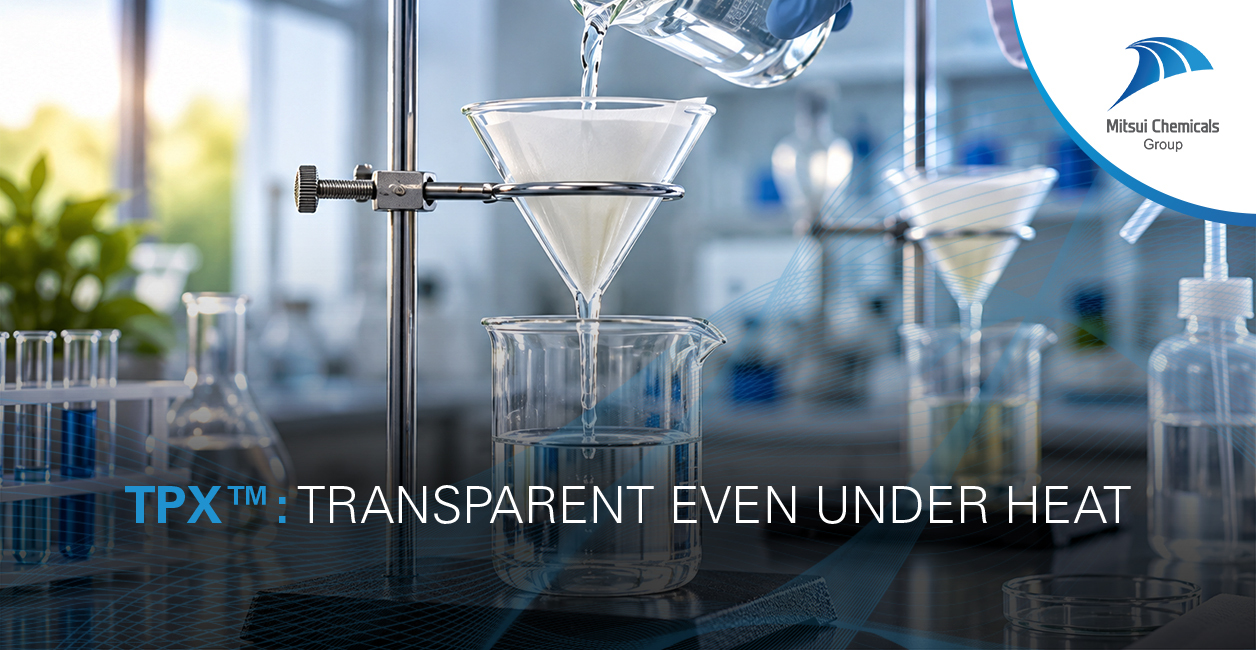
Why TPX™ Stays Clear
The reason comes down to molecular structure. TPX™ is technically a crystalline olefin polymer, and crystalline plastics scatter light because their molecules pack into an ordered structure. That's normally what makes a plastic look milky rather than clear. TPX™ has a molecular arrangement that avoids this, so despite being crystalline it comes out transparent, with clarity close to glass, acrylic, or polycarbonate.
That single quirk is what makes the rest of the material's property list possible without the usual trade-offs.
What TPX™ Actually Does Well
Heat is the first thing worth mentioning. TPX™ melts somewhere in the 230–240°C range, which puts it well ahead of most commodity plastics and a good number of engineering resins too. That's the reason it turns up in autoclavable labware and microwave-safe containers: it can go through a sterilization cycle or sit under sustained heat without losing its shape.
Release behavior is the second standout trait. TPX™'s surface tension sits near PTFE's, so molded and cast parts made from it separate cleanly from whatever they're formed against. Rubber hose manufacturers use it for mandrels and sheaths for exactly this reason. FPC producers use it as a release film. Synthetic leather makers use it as release paper. In each case the job is the same: come off cleanly, without residue, without damaging the part it was shaping.
Weight is where TPX™ separates itself from almost everything else on the market. It has one of the lowest densities of any thermoplastic in commercial use, so parts molded from it come out lighter than equivalent parts in most other resins, clear or otherwise. That matters in film and sheet applications especially, where every layer of added weight compounds.
Chemically, TPX™ holds up against acids, alkalis, and alcohols better than the other clear plastics it competes with, largely because its backbone is built from stable carbon-carbon bonds rather than the more reactive groups found in materials like polycarbonate. And because it's a polyolefin, it barely absorbs moisture, which means dimensions stay put and repeated steam exposure doesn't degrade it. That's the same property that makes it suitable for lab equipment and pharmaceutical components that go through autoclaving over and over.
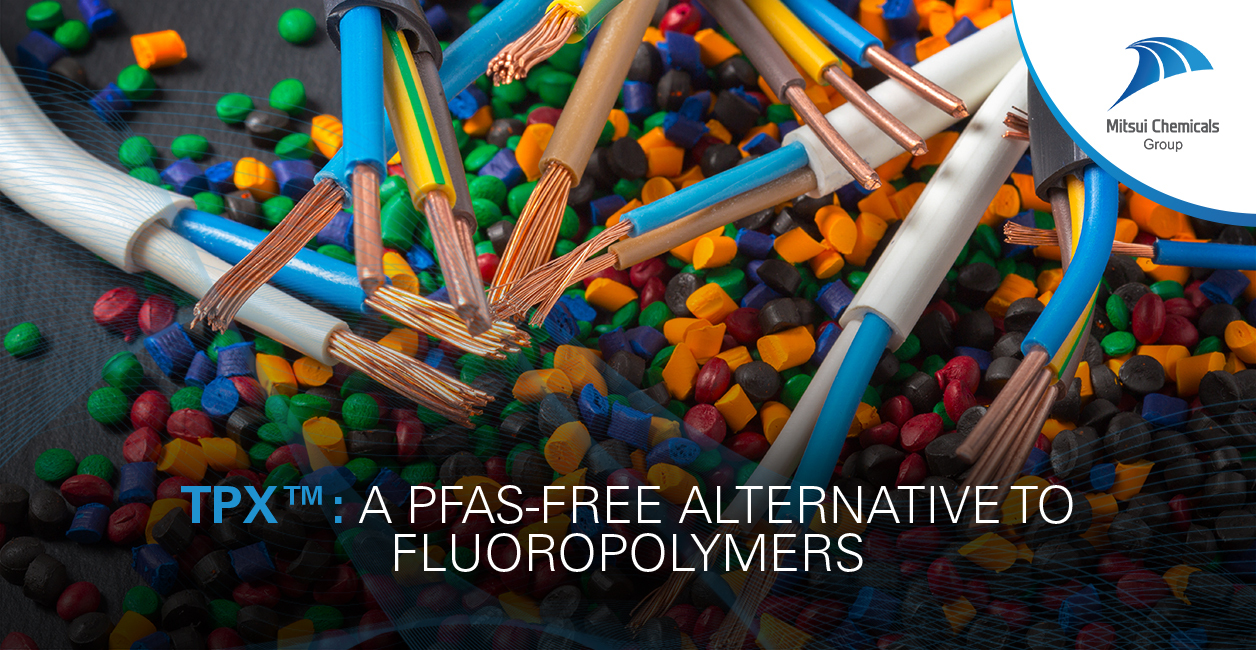
There's also an electrical angle that's become increasingly relevant. TPX™'s non-polar structure gives it dielectric performance close to PTFE's, and that performance holds steady across a wide frequency range. Combined with its heat resistance and its clean release properties, this has put TPX™ on the shortlist as a PFAS-free substitute for fluoropolymers in cable insulation, connectors, and high-frequency electronic components, at a moment when PFAS regulation is tightening across most major markets.
One more property worth flagging: TPX™ film permits controlled gas transmission, which is why it shows up in gas-permeable packaging and certain medical devices where that's a functional requirement rather than a flaw.
Processing Doesn't Get Restrictive
A lot of high-clarity, high-heat polymers only work within a narrow processing window. TPX™ doesn't have that limitation. It runs through injection molding, blow molding, extrusion into film, and can be formed into rods, pipe, and profile shapes, plus fiber-spinning extrusion for hollow-fiber applications. A designer can move between very different part geometries without switching resin families, which cuts down on qualification work when a product line needs both a molded component and a film component from the same material.
Where It Ends Up
Mandrels and sheaths for high-pressure rubber hose production. Release film for flexible printed circuits. Release paper in synthetic leather manufacturing. Wire and cable insulation, along with connectors, where the PFAS-free dielectric performance is the selling point. Laboratory ware and experimental apparatus that need to survive autoclaving while staying visually clear. Medical tubing and hollow fibers. Heat-resistant, microwave-safe food containers and cookware, backed by food-contact certification. Cosmetics packaging, where clarity and chemical resistance to formulation ingredients both matter. LED mold cups, which depend on the combination of heat resistance and clean release during fabrication. And as a resin modifier, TPX™ gets blended into PP, PET, TPE, and PA to lift their heat resistance, release behavior, or weight profile without a full material switch.
The PFAS Angle Is Becoming the Main Story
For years, TPX™'s pitch was mostly about the transparency-heat-release combination. That's still true, but the PFAS conversation has changed how the material gets evaluated. Fluoropolymers have been the default choice for heat resistance, release, and dielectric performance for decades, and as regulations narrow what's still permitted, companies using them are actively hunting for substitutes. TPX™ offers dielectric performance in the same range as fluoropolymers, release properties that approach PTFE, and solid heat and chemical resistance, all without the PFAS content. For medical tubing, cable jacketing, and composite manufacturing currently built around fluoropolymer specifications, that makes TPX™ a real substitution option rather than a downgrade.
This Isn't a New or Unproven Material
Mitsui Chemicals has expanded dedicated TPX™ production capacity multiple times over the past two decades, driven by sustained demand out of electronics, IT, and industrial materials markets. That kind of repeated capacity investment doesn't happen for a resin that's still finding its footing. It happens for one with a long track record behind it.
Matching the Grade to the Job
TPX™ comes in multiple grades, and they don't all behave the same way. Some prioritize transparency, others trade a bit of clarity for different melt flow characteristics or processing behavior. Getting the grade right before tooling starts saves a redesign later.
If you're weighing materials for a part that needs heat resistance, clarity, clean release, or a PFAS-free stand-in for a fluoropolymer, Mitsui Chemicals India can help match the right TPX™ grade to the job and provide the technical documentation your design team needs. Get in touch with the Mitsui Chemicals India team for samples, datasheets, or engineering support.